Did Patch Adams Girlfriend Really Get Murdered

For my movie assignment I decided to review the film, Patch Adams. Patch Adams is played by Robin Williams. The movie starts off with Hunter Adams, who admits himself into a psychiatric hospital for suicide. After staying there for awhile and helping his friends, who are also patients, one even gave him the name Patch, he decides he wants to go to medical school so he can help others. Patch gets into Virginia Medical University, where he spends his time trying to meet patients and help them even though, a few times it almost cost him his spot in medical school. Patch really thought patients were healed through happiness not just medicine, which most doctors including his dean disagreed with. Eventually into his third year of medical school Patch gets land and a house to fix up so he can open a clinic to help people who don’t have the insurance or money to go to a hospital. Soon after the opening, his girlfriend Korinne is murdered by a patient, who they were helping. This really caused Patch to question his idea of medicine and almost cost him to give up on his dream. Eventually, Patch had to plead his case in front of the medical board because Dean Wolcott was trying to get him dismissed from school for being “excessively happy” and helping patients without a license. In the end, Hunter (Patch) Adams was able to graduate medical school and opened his own clinic that helped patients without insurance or formal facilities and is in the process of opening the Gesundheit Hospital in West Virginia. I really enjoyed this movie and was very eager to watch it because it is based on a true story. It also intrigued me how Patch goes against the norm of just practicing medicine, he wants to get to know a patient on an emotional level, which is something I truly believe in and is something we also touched base on in this class.
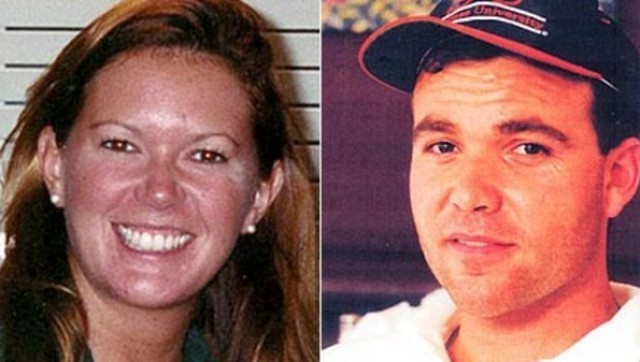
Patch's fellow medical student and girlfriend, Carin, is shot and killed by a psychiatric patient she is helping, and her patient then commits suicide. Patch is devastated when he attends Carin's funeral. He is about to abandon his dreams and his goals completely, and he plans to withdraw from medical school at once. Feb 19, 2007 Question about the movie Patch Adams.? I missed the part of Patch Adams (on TV) when someone dies, and it's bugging me that I don't know what happened. Did Larry (the suicidal guy) kill Patch's girlfriend?
During Patch’s start at medical school we see and learn all about the passion he has for helping others. One of his first lectures at medical school is one from Dean Wolcott. We learn that he wants to “take humanity” out of the medical students in order to make them better. Patch is astonished by this and sees this as power and control instead of actually being more concerned about the patient himself, which is what he believes is a doctors job. Patch learns that as a medical student he actually doesn’t get to see, communicate, or treat patients until his third year. At this point, it is merely about the textbook and memorizing facts instead of connecting with patients. Patch is really interested in getting an emotional response from patients for example a smile, not just a programmed response. Patch believes in treating the patient as well as the disease. This idea has much to do with topics we learned about and discussed during this course. Much of what Patch believes in is doctor patient communication. During this course, we learned about Arthur Kleiman in section two. Arthur Kleiman was a U.S. doctor, who pioneered the idea of physicians to better their job of healing patients if they listen more fully and more to the meaning of what the patient is saying than just for diagnostic purposes, which we learned was illness narratives. We learned that illness narratives are a way for a person to express their ideas of what the meaning of illness means to them. The same illness can mean different things to different people. This in turn means that different treatments are necessary for different patients. “Furthermore, these models- which can be thought of as cognitive maps-are anchored in strong emotions, feelings that are difficult to express openly and that strongly color one person’s reactions to another’s explanatory models” (pg 122, Kleiman). We learn from Kleiman what happens when physicians are too concentrated on the physical symptoms of disease that they cannot even allow patients to speak social, spiritual, emotional, or psychological aspects of their lives. We learned that dismissing other aspects of personal life that could affect a disease like stress, means you aren’t fully treating the patient because these things are just as important. Patch Adams is a person who believes a patient’s emotion is just as important when treating them. Patch believes that all of us are dying and that we need to improve health overall, the idea that it is important to improve quality of life not just death. Patch’s beliefs are very different from those we learned in class that included Western Biomedicine. We learned that Rene Descartes starts the idea of Western medicine, which splits the mind and body completely, the spirit or soul is not important towards health and wellness but it is important as the subject of religion, which is separate from the field of medicine. We learned that Cartesian duality is the split of the body and the mind, which is totally opposite of what Patch believed in as a doctor. Throughout the movie we learn of Patch’s fight for his idea of what medicine is and how it should be practiced. In the end, he gets to graduate medical school and eventually opens his own home based clinic that is all about the wellness of the patient overall. He treats his patients without payment, malpractice insurance, or formal facilities. He ends up purchasing 105 acres of land in West Virginia and starts the construction of the Gesundheit Hospital. Patch gets to fulfill his dream and really help people, which in the end is all he wanted.
I really enjoyed this movie, it was very moving and definitely touched me. I think it would be a great addition to this class because it shows us both aspects of medicine. It depicts the side of just looking at the patient as a disease and to just use textbook medicine to heal someone, while it also shows the other aspect. It teaches us to think of patients as people, ones who have feelings and emotions.
Gabriel, Cynthia. “Week 3: Cartesian Duality, Biomedicine, and “Sprit”.” Lecture, July 14, 2015.
Kleinman, Arthur. “Conflicting Explanatory Models in the Care of the Chronically Ill.” Illness Narratives, 122. New York: Basic Books, 1988.
The dictionary defines a hero as any man renowned for his courage or feats of valor, or any man admired for his character, ideals, or accomplishments. But a hero is much more than just those things. A hero must have heart, he must be able to stand up for something he believes in, he must be caring and brave. It is not fair to call just anyone a hero. A hero must be someone special to you and someone you admire. A hero is a champion, a conqueror, an idol, and your Superman. A hero is not just anyone. A hero is special.
Hunter 'Patch' Adams was born into a strict military-like family. His father ran the household like a military institute and they were constantly moving. Due to his family's frequent moves to diverse places, he learned to accept differences in people and to quickly make friends. Although he was never close to his father, he was very close to his mother. She instilled in him a sense of humor and made him want to learn. She gave him love and attention. She was very special to him. As Hunter started school, he became known as the class clown. He goofed off all the time because he got so bored with learning things that were too easy and simplistic for him. Eventually, he became interested in the diverse world of science and math. He won many small science fairs and entered, and won, the All-Europe science fair. Soon after winning one of his last science fairs, he went to spend a week with his father, who had been constantly drunk or too busy for him and his brother before. During this time, his father told him of the wars he had fought in and of his best friend who had died while saving his life, subjects which he never even talked about before. He and his father became very close during this week. A few days after, his father died suddenly of a heart attack.
Soon after, Adams and his family moved to Northern Virginia to live with his uncle and aunt for a few months before moving to West Virginia a little later. Adams became very close to his uncle and his uncle became a second father to him. He went to school and because he was in a racist town, he stood out as a person who loved everyone no matter what their skin color. Things got better for him. He started to date his first girlfriend, Donna. He dated her for quite some time. Right before he graduated, he developed ulcers in his stomach and he began to take medicine that made him sleepy most of the time.
His girlfriend inevitably broke up with him in his freshman year in college, and then, right around the same time, his uncle committed suicide. He dropped out of college and became dreadfully depressed. He was convinced he was still in love with Donna, and he wanted her back. He became obsessed with suicide. He would go and sit on the edge of a cliff almost everyday, and he would write to or about her. He was convinced that he would jump as soon as he finished, but luckily he was too wordy.
The Bulldog is a 5-shot traditional double-action revolver designed by Doug McClenahan and produced by Charter Arms.It was introduced in 1973. The Bulldog has been available for the.44 Special and.357 Magnum cartridges.It was a top-selling gun during the 1980s and it is considered to be Charter Arms' trademark weapon. It has been produced by four different companies since it was released. This is a discussion on Older Charter Arms Snubby within the Pistols & Revolvers forums, part of the Pistol & Revolver Forum category; I have had this old Undercover revolver for a number of years. The serial # is 840xxx and it was made in Stratford, Ct. In fact, Connecticut based Charter Arms currently produces several variants of its Bulldog revolver in.44 Special ¾ all 100 percent U.S. Made and offering a lifetime warranty. The Bulldog On Duty shown here retails for $436.00. Ammunition is available and Charter Arms even sells a holster for this gun. Known for its rugged reliability and stopping power, Charter’s.44 Special is a versatile revolver for personal or home protection. With a barrel length of 2.5', the.44 Special is one of the larger revolvers to qualify for concealed carry. It has potent stopping power, while not being burdensome to carry. Charter arms 44 bulldog review. Charter.44 bulldog, Stamford, Conn. I'm not really sure that you can date a Charter Arms gun, unless you do so thru Charter Arms. Maybe some one who knows more about this will come along and set us both straight. This is the updated serial number info that I have - based upon around 800 data points.
He went to his mother right after a terrible visit with Donna, and he told her that he had been trying to commit suicide and that he needed to be checked into a mental hospital. While in the hospital, Adams made many different friends. The patients in the hospital changed him, especially one of them. One of the patients, who was suffering from loneliness, made Adams realize that he was loved and he was not lonely; he had friends. It is said that this patient was the one who gave him the nickname Patch. (There is another story that says that Patch gave himself the name, Patch, because he wanted to forgo any evidence of his southern ancestry.) Also in the hospital, he realized his passion; healing people with laughter.
When he got out of the hospital, he knew that he wanted to help other people. He applied to med school and they advised him that before he enrolled that he should get his life back together. He eventually decided to try to enroll again after getting a job for awhile. He finally entered pre-med school in '64 and then, three years later, he entered med school at Medical College of Virginia. He loved to go and visit the hospital patients. He would make them laugh and do the funniest antics around them. His professors did not like his behavior, probably because of its uniqueness and non-seriousness.
Patch went on to start making his one dream into a reality. He believed that the medical system was twisted and that it cheated poor people. So, he decided that he wanted to build a hospital. But his dream was for a hospital back home in West Virginia, where he would prove his methods in day-to-day practice. At the Gesundheit Institute, as he calls it, doctors would work for peanuts, and patients would never be billed. After much fund-raising, his dream started to become a reality. His Gesundheit Institute is not completely perfected, but it is up and running. One person said of the Institute: 'There, amongst beautiful mountains, hardwood forests and waterfalls, Gesundheit advocates are constructing a wholistic rural hospital and healthcare community based on the vision of what healthcare should be like. That means patient care where laughter, joy and creativity will be an integral part of the healing process. Healthcare will be provided without cost and doctors will carry no malpractice insurance. Doctors and patients will relate to each other on the basis of mutual trust, and patients will receive plenty of time from their doctors. Allopathic doctors and practitioners of alternative medicine will work side by side.' Although he does not run it anymore, he still talks about it and tries to raise money for it.
Patch's theory on healing is definitely different. He believes that laughter is the best cure. He loves to go from hospital to hospital making people laugh and teaching regular doctors how to be funny for their patients. He 'thinks every doctor should be a heart specialist -- a merry heart, that is.'
Patch could be considered the most useful clown of the century. He uses his clown-like attitude for good. He has helped people feel and/or get better, he has stopped fights in the streets by just walking around acting and looking like a clown, and he has made an unforgettable impression on many. He is so compassionate and has never once had to give one of his patients a tranquilizer or psychiatric medication. Silliness is one of his virtues and he thinks that every doctor should possess it.
Hunter 'Patch' Adams has been a physician for nearly 30 years, but he has been a clown for almost 40. He lives to make people laugh and feel good. He says that he is looking for a world where love will no longer be extraordinary, and he thinks that the role of a clown and a physician are the same: 'to elevate the possible and to relieve suffering.' Patch has been to many different countries with his clowns, trying to work his charms on the many different patients and underprivileged people of all shapes and sizes. He says that living in clown clothes is his gift to a world that he thinks is depressed, lonely, and lacking compassion.
Since he started his expedition to raise money for the Gesundheit Institute, he has written two books, Gesundheit: Good Health is a Laughing Matter and House Calls. In 1994, he won the Institute of Noetic Sciences Award for Creative Altruism. He has come a long way in his dream of the Gesundheit Institute and he has become well-known through his movie, 'Patch Adams.'
Patch Adams is an incredible man, and one that I truly admire. He is definitely NOT perfect, but he has accomplished so much and has more than just a good heart. He is special and everybody should know about him!