How To Install Joomla On Iis 8 For Windows
I have Windows XP Pro SP3 and have issue with installing IIS. It just hangs after about 80% of installation at 'Completing configuration of SMTP services'.
by Keith Newman and Robert McMurray
In this step of building a PHP website, you install IIS and FastCGI, download and install PHP and the WinCache extension, and upload your PHP application.
When you are done, make sure that IIS and the PHP are installed, and your PHP application has been added to your website. Then go on to Step 2: Configure PHP Settings.
1.1. Install IIS
You can use the Web Platform Installer (Web PI) to install IIS, and applications that run on IIS. Web PI installs the latest versions of available Web Platform offerings with just a few simple clicks. Using Web PI, you can download and install any new tools or updates, including PHP. To learn more about the Web PI, see Learn more and install the Web PI.
If you do not use Web PI to install IIS, you can install IIS manually. To install IIS manually, use the following steps:
To install IIS on Windows Server 2012
On the Start page, click the Server Manager tile, and then click OK.
In Server Manager, select Dashboard, and click Add roles and features.
In the Add Roles and Features Wizard, on the Before You Begin page, click Next.
On the Select Installation Type page, select Role-based or Feature-based Installation and click Next
On the Select Destination Server page, select Select a server from the server pool, select your server, and click Next.
On the Select Server Roles page, select Web Server (IIS), and then click Next.
On the Select Features page, note the preselected features that are installed by default, and then select CGI. This selection also installs FastCGI, which is recommended for PHP applications.
Click Next.
On the Web Server Role (IIS) page, click Next.
On the Select Role Services page, note the preselected role services that are installed by default, and then click Next.
Note
You only have to install the IIS 8 default role services for a static-content web server.
On the Confirm Installation Selections page, confirm your selections, and then click Install.
On the Installation Progress page, confirm that your installation of the Web Server (IIS) role and required role services completed successfully, and then click Close.
To verify that IIS installed successfully, type the following into a web browser:
http://localhostYou should see the default IIS Welcome page.
To install IIS on Windows 8

On the Start page, type Control Panel, and then click the Control Panel icon in the search results.
In Control Panel, click Programs, and then click Turn Windows features on or off.
In the Windows Features dialog box, click Internet Information Services, note the preselected features that are installed by default, and then select CGI. This selection also installs FastCGI, which is recommended for PHP applications.
Click OK.
To verify that IIS installed successfully, type the following into a web browser:
http://localhostYou see the default IIS Welcome page.
1.2. Install PHP by using Web PI
The preferred method to install PHP on a Windows or Windows Server computer is to use Web Platform Installer (Web PI).
To install PHP by using Web PI
- Open a browser to the following website: Microsoft Web Platform Installer 3.0.
- Click Download It Now, and then click Run.
- At the top of the Web Platform Installer window, click Products.
- Click Frameworks, and then select the current version of PHP.
- Click Install. The Web Platform Installation page displays the version of PHP and its dependencies that will be installed.
- Click I Accept. Web PI installs the PHP packages.
- Click Finish.
1.3. Download and Install PHP Manually
If you decide to download PHP and install it manually, the procedures in this section guide you the following tasks:
- Download PHP and the WinCache extension.
- Install PHP and WinCache.
- Add the PHP installation folder to the Path environment variable.
- Set up a handler mapping for PHP.
- Add default document entries for PHP.
- Test your PHP installation.
To keep this procedure simple, install the WinCache extension but do not configure it. You will configure and test WinCache in Step 2: Configure PHP Settings.
To download and install PHP and WinCache
- Open your browser to Windows for PHP Download Page and download the PHP non-thread-safe zip package.
- Download the WinCache extension from the List of Windows Extensions for PHP.
- Extract all files in the PHP .zip package to a folder of your choice, for example
C:PHP. - Extract the WinCache .zip package to the PHP extensions folder (ext), for example
C:PHPext. The WinCache .zip package contains one file (Php_wincache.dll). - Open Control Panel, click System and Security, click System, and then click Advanced system settings.
- In the System Properties window, select the Advanced tab, and then click Environment Variables.
- Under System variables, select Path, and then click Edit.
- Add the path to your PHP installation folder to the end of the Variable value, for example
;C:PHP. Click OK. - Open IIS Manager, select the hostname of your computer in the Connections panel, and then double-click Handler Mappings.
- In the Action panel, click Add Module Mapping.
- In Request path, type *.php.
- From the Module menu, select FastCgiModule.
- In the Executable box, type the full path to Php-cgi.exe, for example
C:PHPPhp-cgi.exe. - In Name, type a name for the module mapping, for example FastCGI.
- Click OK.
- Select the hostname of your computer in the Connections panel, and double-click Default Document.
- In the Action panel, click Add. Type Index.php in the Name box, and then click OK.
- Click Add again. Type Default.php in the Name box, and then click OK.
To test your PHP installation
Open a text editor, for example Notepad, as Administrator.
In a new file, type the following text:
<?php phpinfo(); ?>Save the file as
C:inetpubwwwrootPhpinfo.php.Open a browser and enter the following URL:
http://localhost/phpinfo.phpA nicely formatted webpage is displayed showing the current PHP settings.
1.4. Add Your PHP Application
Once you have IIS and PHP installed, you can add a PHP application to your web server. This section describes how to set up your PHP application on an IIS web server with PHP installed. It does not explain how to develop a PHP application.
To add a PHP web application
Open IIS Manager.
- For Windows Server 2012, on the Start page click the Server Manager tile, and then click OK. On the Server Manager Dashboard, click the Tools menu, and then click Internet Information Services (IIS) Manager.
- For Windows 8, on the Start page type Control Panel, and then click the Control Panel icon in the search results. On the Control Panel screen, click System and Security, click Administrative Tools, and then click Internet Information Services (IIS) Manager.
In the Connections pane, right-click the Sites node in the tree, and then click Add Website.
In the Add Website dialog box, type a friendly name for your website in the Site name box.
If you want to select a different application pool than the one listed in the Application Pool box, click Select. In the Select Application Pool dialog box, select an application pool from the Application Pool list and then click OK.
In the Physical path box, type the physical path of the website's folder, or click the browse button (..) to navigate the file system to find the folder.
If the physical path that you entered in step 5 is to a remote share, click Connect as to specify credentials that have permission to access the path. If you do not use specific credentials, select the Application user (pass-through authentication) option in the Connect As dialog box.
Select the protocol for the website from the Type list.
The default value in the IP address box is All Unassigned. If you must specify a static IP address for the website, type the IP address in the IP address box.
Type a port number in the Port text box.
Optionally, type a host header name for the website in the Host Header box.
If you do not have to make any changes to the site, and you want the website to be immediately available, select the Start Web site immediately check box.
Click OK.
See also
Joomla Content Management System (CMS) is easy to install. No matter what server operating system you’re running, Joomla’s installation process walks you through all the steps.
Before you install Joomla, set up the Joomla environment. The easiest way to do this is with XAMPP.
Once you have XAMPP installed, follow these steps to install Joomla:
Click the Download button on Joomla’s page.
Download the compressed .zip or .tar.gz file, as appropriate for your operating system.
Uncompress the Joomla files to the htdocs directory, or create a subdirectory of htdocs and then copy the uncompressed files to that subdirectory.
Your newly installed XAMPP directory contains a subdirectory named htdocs, which is where you put the files you want to access when you navigate to http://localhost in your browser.
Open your browser, and navigate to http://localhost or http://localhost/xxxx (where xxxx is the name of the subdirectory you created in Step 3).
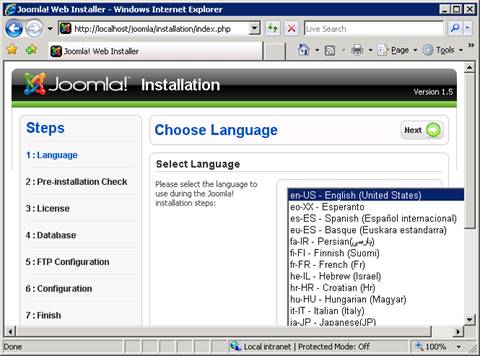
The first Joomla installation page appears.
Select a language.
The heirs korean drama free. 'The Heirs' depicts the friendships, rivalries and love lives of young, rich heirs led by Kim Tan (Lee Min-Ho) and a girl named Cha Eun-Sang (Park Shin-Hye). Unlike the others, Cha Eun-Sang is considered ordinary and comes from a poor background. 18-year-old Cha Eun-Sang lives with her mother who is mute. Watch The Heirs drama online English subbed. “The Heirs” depicts the friendships, rivalries and love lives of young, rich heirs led by Kim Tan (Lee Min-Ho) and a girl named Cha Eun-Sang (Park Shin-Hye). Unlike the others, Cha Eun-Sang is considered ordinary and comes from a poor background. Kim Tan is the heir to Empire Group who has been sent to study abroad in the U.S. In reality it's a form of exile, as his elder half-brother back home schemes to take over the family business. While in the States, Kim Tan meets Cha Eun Sang, who arrived from Korea in search of her older sister. He feels himself falling for her, never realizing that she's the daughter of his family's housekeeper. The Heirs, The Inheritors, The One Trying to Wear the Crown, Watch The Inheritors, The One Trying to Wear the Crown, 상속자들 eng sub, The Heirs online ep 1, ep 2, ep 3, ep 4, watch The Inheritors, The One Trying to Wear the Crown, 상속자들 ep 5, ep 6, ep 7, ep 8, ep 9, ep 10, The Heirs dub drama Cantonese, watch The Heirs ep 11, ep 12, ep 13, ep 14, ep 15, The Heirs drama ep 16, ep 17, ep 18, ep 19, ep 20, The Heirs english subtitle, The Heirs chinese subtitle, The Heirs kdrama.
Click Next.
All items in the top pane of Pre-Installation Check page should read Yes.
If you don’t see Yes for any item, contact your ISP’s technical support department).
This page also displays a list of recommended settings. If you’re installing Joomla on an ISP’s server, you don’t have a heck of a lot of choice about these settings, because the ISP’s tech staff determines them.
Click Next.
Review the license and click Next to accept the terms.
The Database Configuration page comes up.
Here are the settings you have to make in this page, along with brief explanations:
Database Type: Choose MySQL.
HostName: Enter localhost.
UserName: In this text box, enter the default MySQL username root.
Password: Enter the password.
DatabaseName: Enter the name you used when you set up your database.
Click Next.
Joomla tests the connection to the database. If everything works properly, it takes you to the FTP Configuration page which you can skip.
Click next to skip the FTP configuration.
The Main Configuration page appears.
Enter the name of your new Joomla site in the Site Name text box.
This name will appear when you log in as an administrator.
Enter an administrator e-mail address in the Your E-Mail text box.
When you log into your new site, you’ll be the super user. The super user has maximum control of the site.
You can create several super users, but you can’t delete a super-user account. However, you can demote the account to a lower site permission level and then delete it.
Enter and then confirm the administrator password you want to use.
Joomla gives you the option of installing some sample data to see how the site works, and unless you’re an experienced Joomla user, you should definitely do that.
Select the Install Default Sample Data button; then click the Install Sample Data command button.
When you complete this step, the Install Sample Data button changes to the Sample Data Installed Successfully button.
Click Next.
Note the message on the right side of the page, which gently reminds you in gigantic red text to remove the installation directory.
Remove the installation directory.
To delete the Joomla installation directory, connect to your site by using your FTP program, and delete the directory there.
Click the Site button to visit your new Joomla site or click the Admin button to go to the administrator control panel.
When the installation is complete, give Joomla a test drive. Click the Site button in the final installation page, or go to http://localhost (or http://localhost/xxxx, if you copied the Joomla files to a subdirectory of htdocs). You should see the Joomla front page.