Panikoorka Plant In Hindi
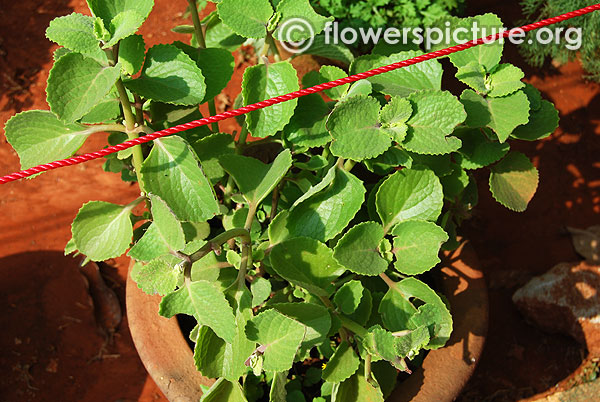
Healthy panikoorka plant in pot It is known as pathar choor in Hindi karpooravalli in Tamil or Indian borage It known to be having numerous therapeutic., Keeping our community safe COVID-19 Safety Precautions. Apr 10, 2019 5 Benefits of Hydrogen Peroxide on Plants and Garden - Duration: 4:23. Daisy Creek Farms with Jag Singh 4,550,071 views. How To Grow An Onion From An Onion Top (2019).
are there. Panikoorka is an Ayurvedic herb , the leaves are used for treating common cold, cough and fever in babies and adults. There are references in Ayurveda of the usage of this herb.The botanical name of Panikoorka is Plectranthus amboinicus . In India it is known as Indian borage, in Hindi known as Patta ajavayin, in Tamil – karpooravalli and referred as navaryila in Malayalam.
Panikoorka, natural remedy for fever, natural anti-pyretic
Panikoorka is very effective home remedy for cold, fever and cough in children. Leaves of panikoorka is squeezed and the juice is taken. A teaspoonful of Panikoorka juice when given to babies would cure their cough, cold, fever, sore throat, nasal congestion and chest congestion. Grownups should take 2 tablespoonful of juice to relieve fever.
Panikoorka, very effective for cough and chest congestion
Panikoorka is a natural expectorant for children. Boil the leaves of panikoorka for 5 mins in 1 cup of water. When cool feed 2 tspn of this decoction to children for curing their cough, and bronchitis. Adults can take quarter cup of Panikoorka decoction for getting relief from chronic cough and bronchial asthma. Panikoorka is most effective in children. It is an effective natural remedy for excess phlegm and chest congestion. Ideal for asthma patients, they can consume decoction regularly for relief.
Panikoorka helps improve lactation
Panikoorka helps improve lactation in nursing mothers. The health benefits will be transferred to the child through milk.
Panikoorka addresses First aid too
Applying the extract of panikoorka leaves on the area relieves itching, infection, wounds etc. It is also an effective antidote for insect bites and scorpion bite. It is also used in the treatment of skis, disorders, dandruff and different types of allergies.
Panikoorka can be consumed in different ways to minimize the bitter taste and strong odor.
The juice is extracted from leaves by placing them on a hot tava. The leaves will become transparent when hot. Remove from the tava and squeeze them with your fingers. In case of grown up you can directly squeeze the washed leaves with your fingers to collect juice.
Infants and Toddlers:
- Two three drops of panikoorka leaves juice would treat chest congestion, cough, and cold in infants. Two three drops of the juice when applied on head, would prevent cough and cold in children and adults.
- Panikoorka leaves extract can be mixed with honey and applied on mother's breast so that infant will suck it when they drink milk. You can also apply panikoorka leaves on child’s lips.
- Panikoorka leaves extract can be mixed with powdered organic rock sugar ( Kalkandam in malayalam ) and given to toddlers for throat infection, cough and cold.
- When children complain of stomach pains,problem of worm, you can give Panikoorka leaves extract mixed with sugar three times a day.
- For relieving cough take a mix of panikoorka leaves extract, honey and lemon juice two times a day.
- Inhaling vapors with panikoorka leaves extract would cure cold and fever.
- Add few leaves of Panikoorka into the boiling water for steam inhalation when you have cough and cold . If you are using vaporizer , dip a cotton ball into the Panikoorka juice extract and put it in the mouth of the vaporizer.
- People suffering with gas trouble and flatulence can have heated panikoorka leaves extract with honey twice daily. Grownups suffering from bronchial asthma can consume panikoorka leaves extract mixed with honey and kalkandam.
Panikoorkais a good substitute for oregana flavor in dishes. Can be used to flavor dishes of meat – beef , lamb, etc. Panikoorka is very commonly grown as a potted plant. Indian Borage is a fast growing plant. Propagation is via stem cuttings. The herb grows easily in a well-drained, semi-shaded position.
Try out this snacky recipe which will relieve throat pain and fever:
Panikoorka bajji
Ingredients:
- Panikoorka leaves 10 – 12 nos
- Chana powder -1 cup
- Onion finely chopped- ½ cup
- Green chillies finely chopped – 2 tsp
- Ginger finely chopped- ½ tsp
- Salt to taste
- Optional : addition of finely chopped curry leaves -1/2 tsp and Kothmir – 1 tsp
 Mix all the ingredients. After 10 mins heat oil , dispense the mixture with a spoon into hot oil. Fry till it is brown. Drain bajjis onto tissue paper. Serve hot.
| Plectranthus amboinicus | |
|---|---|
| Scientific classification | |
| Kingdom: | Plantae |
| Clade: | Tracheophytes |
| Clade: | Angiosperms |
| Clade: | Eudicots |
| Clade: | Asterids |
| Order: | Lamiales |
| Family: | Lamiaceae |
| Genus: | Plectranthus |
| Species: | |
| Binomial name | |
| Plectranthus amboinicus (Lour.) Spreng.Syst. veg. 2:690. 1825 | |
| Synonyms | |
Coleus amboinicusLour. | |
Rc6awu-902w drivers for mac free. Plectranthus amboinicus, once identified as Coleus amboinicus, is a semi-succulent perennial plant in the family Lamiaceae[1] with a pungent oregano-like flavor and odor. The origin of Plectranthus amboinicus is unknown, but it may be native to Africa, and possibly India. Plectranthus amboinicus is widely cultivated and naturalized elsewhere in the tropics where it is used as a traditional medicine, spice, and ornamental plant.[1] Common names in English include Indian borage, country borage, Cuban oregano, French thyme, Indian mint, Mexican mint, soup mint, Spanish thyme.[1]Plectranthus is the genus (authored by Kurt Polycarp Joachim Sprengel, 1766 – 1833). The species name, amboinicus refers to Ambon Island, in Indonesia, where it was apparently encountered and described by João de Loureiro (1717 – 1791).[2]
Description[edit]
A member of the mint family Lamiaceae,[1]Plectranthus amboinicus grows up to 1 m (3.3 ft) tall. The stem is fleshy, about 30–90 cm (12–35 in), either with long rigid hairs (hispidly villous) or densely covered with soft, short and erect hairs (tomentose). Old stems are smooth (glabrescent). Leaves are 5–7 cm (2.0–2.8 in) by 4–6 cm (1.6–2.4 in), fleshy, undivided (simple), broad, egg/oval-shaped with a tapering tip (ovate). The margins are coarsely crenate to dentate-crenate except in the base. They are thickly studded with hairs (pubescent), with the lower surface possessing the most numerous glandular hairs, giving a frosted appearance. The petiole is 2–4.5 cm (0.79–1.77 in). Flowers are on a short stem (shortly pedicelled), pale purplish, in dense 10-20 (or more) flowered dense whorls (cymes), at distant intervals, in a long slender spike-like raceme. Rachis 10–20 cm (3.9–7.9 in), fleshy and pubescent. The bracts are broadly ovate, 3–4 cm (1.2–1.6 in) long, acute. The calyx is campanulate, 2–4 mm (0.079–0.157 in) long, hirsute and glandular, subequally 5-toothed, upper tooth broadly ovate-oblong, obtuse, abruptly acute, lateral and lower teeth acute. Corolla blue, curved and declinate, 8–12 mm (0.31–0.47 in) long, tube 3–4 mm (0.12–0.16 in) long. Trumpet-like widened; limb 2-lipped, upper lip short, erect, puberulent, lower lip long, concave. Filaments are fused below into a tube around the style. The seeds (nutlets) are smooth, pale-brown, roundish flattened, c. 0.7 by 0.5 mm (0.028 by 0.020 in).[3]
The aroma of the leaves can be described as a pungent combination of the aromas of oregano, thyme, and turpentine.[4] The taste of the leaves is described as being similar to the one of oregano, but with a sharp mint-like flavor.[5]
Distribution and habitat[edit]
Plectranthus amboinicus is native to Southern and Eastern Africa, from South Africa (KwaZulu-Natal) and Swaziland to Angola and Mozambique and north to Kenya and Tanzania, where it grows in woodland or coastal bush, on rocky slopes and loamy or sandy flats at low elevations.[6][7][8] From Southern Africa it would have been carried by Arabs and other traders to Arabia, India and Southeast Asia along the Indian Ocean maritime trade routes. The plant also currently grows in mainland India. The plant was later brought to Europe, and then from Spain to the Americas, hence the name Spanish thyme.[6][9]
Traditional medicine and research[edit]
In traditional medicine, Plectranthus amboinicus is thought to have medicinal properties,[citation needed] but there is no evidence from clinical research to support such claims.[citation needed] In basic research, the effects of the essential oil were tested with other plant essential oils for possible use as a mosquito repellant.[1][10]
Culinary uses[edit]
The leaves are strongly flavoured and used for stuffings of meat and poultry, beef, lamb and game.[8] The herb is used as a substitute for oregano to mask the strong odors and flavors of fish, mutton, and goat.[9] Its leaves are used to make fritters in Telugu cuisine and consumed occasionally as snacks.
Other uses[edit]
Fresh leaves are used to scent laundry and hair.[1] It is also grown as an ornamental plant.[1][11]
Phytochemicals[edit]
Pokemon liquid crystal phone. The main chemical compounds found in the essential oil of Plectranthus amboinicus are carvacrol (28.65%), thymol (21.66%), α-humulene (9.67%), undecanal (8.29%), γ-terpinene (7.76%), p-cymene (6.46%), caryophyllene oxide (5.85%), α-terpineol (3.28%), and β-selinene (2.01%).[12] Another analysis obtained thymol (41.3%), carvacrol (13.25%), 1,8-cineole (5.45%), eugenol (4.40%), caryophyllene (4.20%), terpinolene (3.75%), α-pinene (3.20%), β-pinene (2.50%), methyl eugenol (2.10%), and β-phellandrene (1.90%). The variations can be attributed to the methodology used in the extraction process, seasonal variations, soil type, climate, genetic and geographical variations of the plant.[13]
Cultivation[edit]
Plectranthus amboinicus is a fast-growing plant commonly grown in gardens and indoors in pots. Propagation is by stem cuttings, but it can also be grown from seeds. In dry climates the herb grows easily in a well-drained, semi-shaded position. It is frost tender (USDA hardiness zones 10-11)[14] and grows well in subtropical and tropical locations, but will do well in cooler climates if grown in a pot and brought indoors, or moved to a warm, sheltered position in winter. In Hawaii and other humid tropical locations, the plant requires full sun.[4]
Common names[edit]
- Cuban oregano[15]
- Country borage[8][16]
- French thyme[8]
- Indian borage[8]
- Indian mint[8]
- Mexican mint (US,[16] favored common name[17])
- Orégano francés (in Cuba and other Spanish language sources)[18]
- Soup mint[8]
- Spanish thyme[16]
- Thick leaf thyme or broad leaf thyme[17]
Gallery[edit]
Indian borage
Cuban oregano
Flowers
Flower
Flowers
References[edit]
- ^ abcdefg'Plectranthus amboinicus (Indian borage), Datasheet, Invasive Species Compendium'. Centre for Agriculture and Biosciences International. 23 November 2017. Retrieved 13 March 2020.
- ^https://www.smgrowers.com/products/plants/plantdisplay.asp?cat_id=14&plant_id=3810&page=9, accessed 13 March 2020
- ^Flora Malesiana, Vol. 8, by Steenis, C. G. G. J. van (Cornelis Gijsbert Gerrit Jan); Steenis-Kruseman, M. J. van; Indonesia. Departemen Pertanian; Lembaga Ilmu Pengetahuan Indonesia; Kebun Raya Indonesia, Publication date 1950, p. 387. Available on https://archive.org/details/floramalesiana83stee.
- ^ abCulinary herbs, by Ernest Small, National Research Council of Canada NRC Research Press, 1997, p. 488.
- ^Florida's Best Herbs and Spices: Native and Exotic Plants Grown for Scent and Flavor, by Charles R. Boning, Pineapple Press Inc, 2010 p. 75.
- ^ abCodd, L. E. W. et al. Flora of Southern Africa : the Republic of South Africa, Basutoland, Swaziland and South West Africa. Vol. 28, part 4, 1981, page 148. Available on Biodiversity Heritage Library at https://www.biodiversitylibrary.org/page/51375271.
- ^Flora Malesiana, Vol. 8, by Steenis, C. G. G. J. van (Cornelis Gijsbert Gerrit Jan); Steenis-Kruseman, M. J. van; Indonesia. Departemen Pertanian; Lembaga Ilmu Pengetahuan Indonesia; Kebun Raya Indonesia, Publication date 1950, p. 387. Available on https://archive.org/details/floramalesiana83stee.
- ^ abcdefg'Plectranthus amboinicus'. Germplasm Resources Information Network (GRIN). Agricultural Research Service (ARS), United States Department of Agriculture (USDA). Retrieved 21 August 2012.
- ^ abGeorge Staples, Michael S. Kristiansen (1999). Ethnic Culinary Herbs: A Guide to Identification and Cultivation in Hawaii; page 88. University of Hawaii Press. ISBN978-0824820947.CS1 maint: uses authors parameter (link)
- ^Lalthazuali; Mathew, N (2017). 'Mosquito repellent activity of volatile oils from selected aromatic plants'. Parasitology Research. 116 (2): 821–825. doi:10.1007/s00436-016-5351-4. PMID28013374.
- ^The Herbalist in the Kitchen, by Gary Allen, University of Illinois Press, 2010, p. 198.
- ^Senthilkumar, A; Venkatesalu, V (2010). 'Chemical composition and larvicidal activity of the essential oil of Plectranthus amboinicus (Lour.) Spreng against Anopheles stephensi: A malarial vector mosquito'. Parasitology Research. 107 (5): 1275–8. doi:10.1007/s00436-010-1996-6. PMID20668876.
- ^Lopes, P. Q; Carneiro, F. B; De Sousa, A. L; Santos, S. G; Oliveira, E. E; Soares, L. A (2017). 'Technological Evaluation of Emulsions Containing the Volatile Oil from Leaves of Plectranthus Amboinicus Lour'. Pharmacognosy Magazine. 13 (49): 159–167. doi:10.4103/0973-1296.197646 (inactive 2020-01-22). PMC5307902. PMID28216901.
- ^'Plectranthus amboinicus'. Fine Gardening. Retrieved 2017-07-18.
- ^Gary Allen, The Herbalist in the Kitchen, University of Illinois Press, 2010, p. 198.
- ^ abcTropicos, http://www.tropicos.org/Name/17602719, accessed 21 August 2012
- ^ abEncyclopedia of Life, http://eol.org/pages/486424/names/common_names, accessed 21 August 2012
- ^[1] and [2] (both in Spanish)
External links[edit]
| Wikimedia Commons has media related to Plectranthus amboinicus. |
| Wikispecies has information related to Plectranthus amboinicus |